
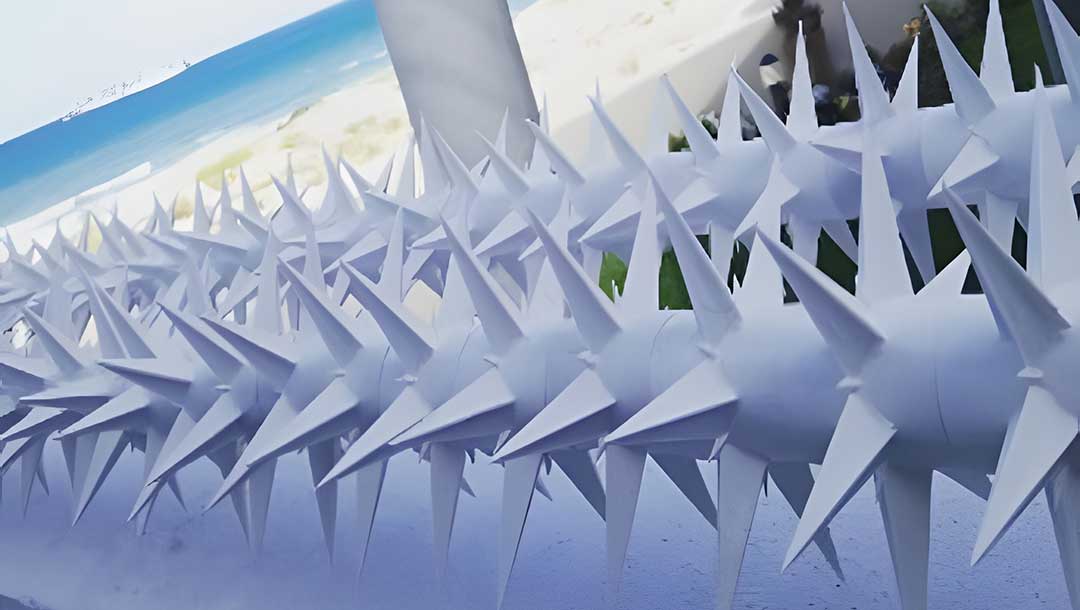
Rotational security spikes (also known as rotating anti-climb spikes or roller barriers) can be a very effective security measure in the right setting, especially as a non-lethal, physical deterrent against climbing or scaling fences, walls, or gates.
However, whether they are a good alternative depends on what you’re comparing them to (e.g., static spikes, electric fencing, security mesh, or surveillance systems) and your specific needs (home vs. business, urban vs. rural, aesthetics, etc.).
🔄 What Are Rotational Security Spikes?
They consist of rotating cylindrical spikes or fins mounted on a fixed bar or bracket. When someone tries to grab or climb over them:
- The spikes rotate freely, making it hard to gain grip or balance.
- The constant motion makes it extremely difficult to scale without injury or falling.
✅ Benefits of Rotational Security Spikes
1. 🧗♂️ Highly Effective Anti-Climb Barrier
- Rotation makes it far more difficult to overcome than fixed spikes or sharp edges.
- Deters intruders without relying on electricity or complex systems.
2. 🔒 Non-Lethal But Physically Deterrent
- Designed to injure or prevent entry without causing serious harm.
- Often used in schools, warehouses, utility sites, and secure compounds where liability is a concern.
3. 🧰 Low Maintenance
- Unlike electronic systems or alarms, they have no power requirements.
- Made from galvanized steel, aluminum, or stainless steel, so they’re weather-resistant and durable.
4. 🏭 Suitable for Commercial and Industrial Use
- Great for flat walls, fences, roofs, or pipework where climbing access is likely.
- Often installed on gates, perimeter walls, or ledges.
5. 📏 Customizable
- Available in different lengths, colors, materials, and mounting types.
- Can be painted or coated to reduce visual impact or match building aesthetics.
⚠️ Limitations / Considerations
1. 🚫 Not a Complete Standalone Solution
- Best used as a supplement to fencing, walls, CCTV, or alarms—not as the only defense.
- Doesn’t stop forced entry through a gate or door—only prevents climbing over something.
2. 🧾 Legal Restrictions
- In some areas (especially residential zones), they may be regulated due to the potential for injury.
- May require warning signs, proper height placement, or permission from authorities or neighbors.
3. 🏘️ Visual Impact
- Can look aggressive or industrial, which might not suit residential aesthetics.
- Could deter not just criminals—but also potential tenants, neighbors, or buyers.
4. 🛠️ Installation Complexity
- Needs to be securely mounted with proper brackets.
- Improper installation may allow intruders to bypass or jam them.
🔁 Are They a Good Alternative To…
| Compared To | Are Rotational Spikes a Good Alternative? | Notes |
| Static wall spikes | ✅ Yes, more effective and harder to bypass | But more expensive |
| Security mesh/screens | 🚫 Not equivalent | Mesh blocks access; spikes deter climbing |
| CCTV/alarms | 🔄 Complementary, not a replacement | Spikes deter, but don’t detect |
| Electric fencing | ✅ For lower-risk, non-lethal setups | Safer, no electricity needed |
| Barbed wire | ✅ More visually discreet and often safer | Especially in urban/commercial areas |
🏁 Summary
Rotational security spikes are an effective anti-climb barrier and a solid alternative to traditional wall spikes or barbed wire—especially in commercial, industrial, or utility settings. They offer a passive, non-electric, low-maintenance deterrent with a high success rate against climbing intrusions.
They may not be ideal as the only security measure, but when combined with fences, walls, or cameras, they’re a strong physical deterrent that adds real value to perimeter protection.